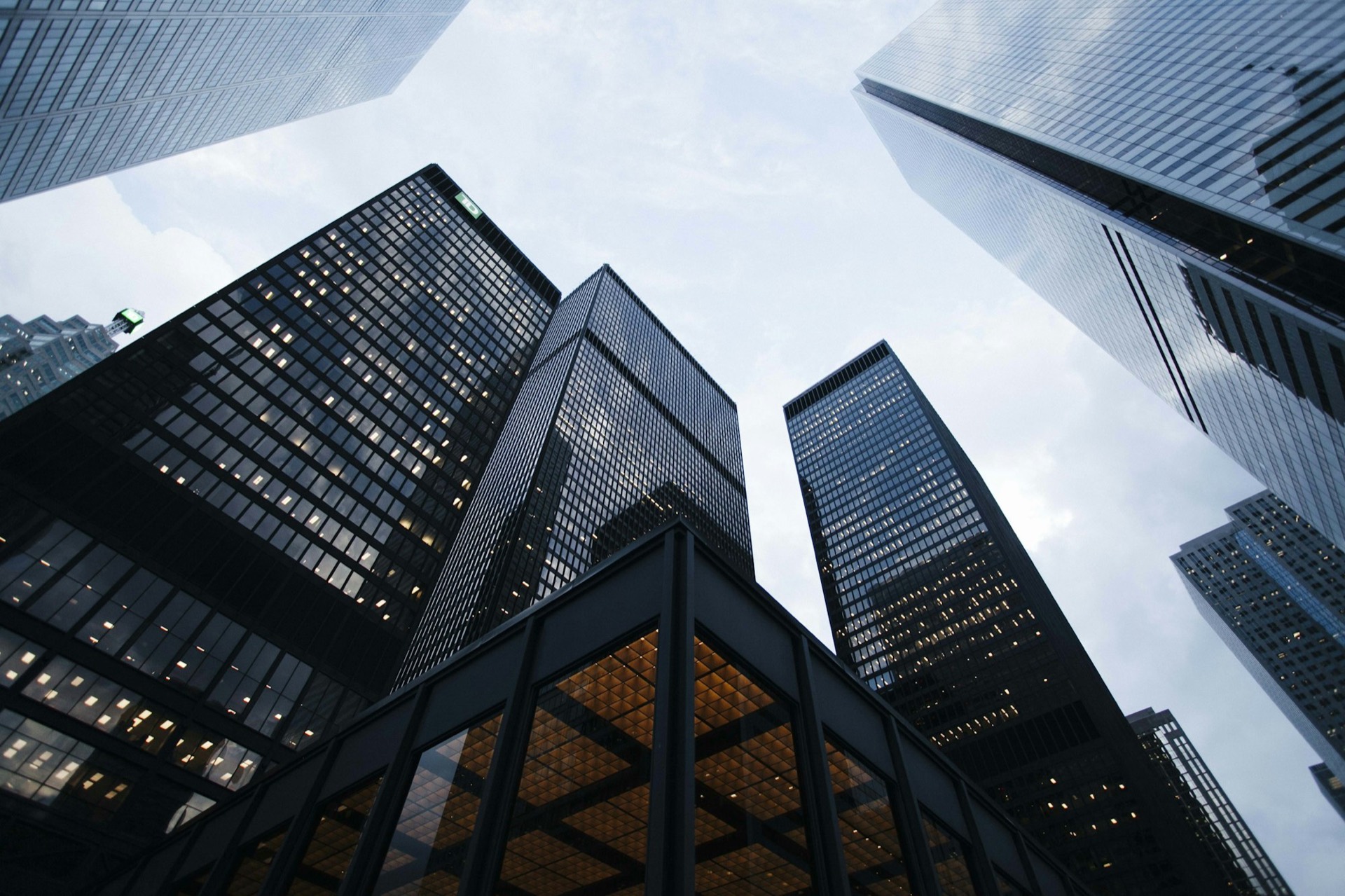
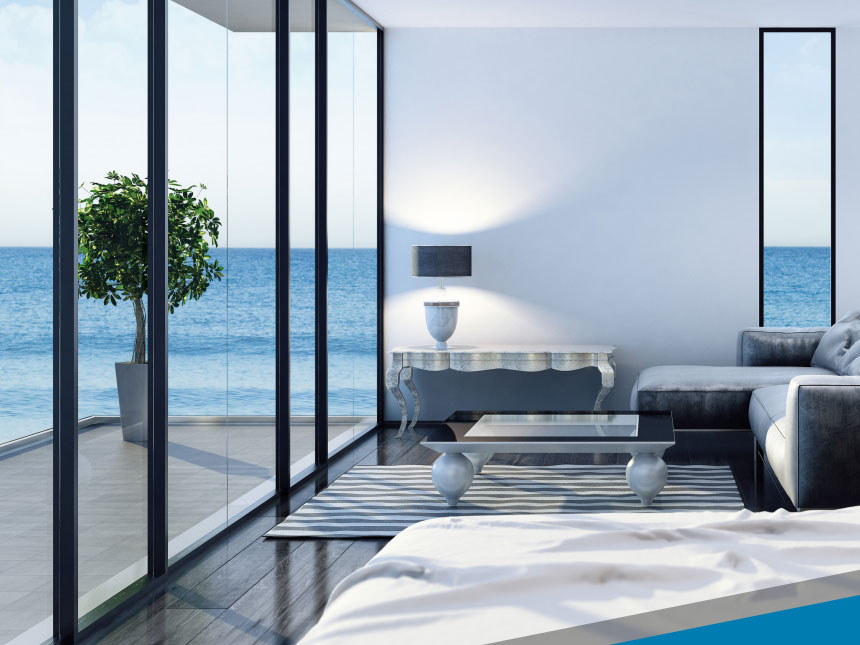
Sunny Isles Beach is the single harshest glass environment we install in. The towers along the stretch locals call Millionaire's Mile sit directly on the Atlantic with nothing between the facade and the open ocean. That means salt in the air every hour of every day, sun that reflects off the water and strikes the same pane twice, and floor-to-ceiling glass hung hundreds of feet up where wind drives spray onto the elevation. Film survives here, but only the right film specified the right way. This is a post about chemistry and durability, because on this coastline that is what separates a film that lasts two decades from one that fails at the edges in four years.
Salt air is a chemical attack, not just weather
Inland, film ages mostly from heat and UV. On an oceanfront tower in Sunny Isles, there is a third and more aggressive force: chloride. Salt aerosol settles on the glass, works into the edge of any surface film, and attacks the bond line between the film and the pane. On a standard architectural adhesive that was formulated for a suburban office window, that chloride exposure is what drives edge lift, delamination, and the hazy peel-back you see on cheap film jobs facing the water.
The face of the film matters less than the perimeter. A film can look flawless across the middle of the pane and still be failing where it counts, at the edge seal, because that is where salt and moisture get their entry point. Any conversation about film on this coastline has to start at the adhesive, not the coating.
Why we spec marine-grade adhesive on this coastline
Not all film adhesive is the same, and the difference is decisive within a few blocks of the water. Standard architectural pressure-sensitive adhesive is a fine, cost-effective choice for the vast majority of Miami-Dade, where the glass sits inland or behind other structures. On direct oceanfront elevations in Sunny Isles, we move up to a marine-grade adhesive system engineered to hold its bond under constant chloride and humidity load.
The practical difference is edge integrity over time. Marine-grade adhesive resists the moisture wicking and chloride creep that lift a standard film's perimeter. It keeps the bond line sealed against the exact failure mode that oceanfront glass produces. We do not treat this as an upsell. We treat it as the correct spec for a defined exposure, the same way you would not put a suburban roof on a beachfront house. When we quote a tower on Collins Avenue, the adhesive tier is matched to the elevation, and the eastern oceanfront faces get the marine system.
Floor-to-ceiling glass on high oceanfront elevations
The Sunny Isles towers are built around the view, which means enormous single spans of glass on the eastern face, often floor to ceiling and often forty stories up. Two things follow from that.
First, the thermal load on those panes is severe. A single 6 mm clear pane on an unshaded east elevation carries a solar heat gain coefficient near 0.73, meaning most of the sun's energy passes straight into the room. Our heat rejection film brings that figure down toward 0.21 on the treated glass while holding visible light transmission in the 40 to 70 percent range, so the ocean view stays open and there is no dark curtain effect. On a wall of glass this size, that is the difference between a room that is usable in the afternoon and one that is not.
Second, large panes at height are unforgiving of a bad edge seal. The bigger the pane and the more exposed the elevation, the more the adhesive spec earns its place. This is why we pair the higher-performance films with the marine adhesive system on these faces rather than treating film selection and adhesive selection as separate decisions.
Anti-shatter film on non-impact towers
Not every building on this stretch is uniformly impact-glazed. A number of the older and mid-generation Sunny Isles towers carry non-impact glass on portions of the elevation, amenity levels, and lower floors. On that glass, our anti-shattering film bonds an 8 mil polyester laminate to the interior face of the pane. When the glass is struck, it still breaks, but the fragments stay held in the film so the pane holds together in the frame instead of spraying into the room.
We are direct about what this does and does not do. Florida law does not permit any film to be marketed as hurricane-rated or as a substitute for impact glazing, and we do not make that claim. What anti-shatter film adds on a non-impact pane is fragment retention and a measure of breach delay, which is a real safety upgrade for buildings that have not been fully reglazed. For an HOA managing a tower with mixed glazing, it is a way to raise the safety floor on the older panes without a full glass replacement project.
How film actually holds up in this exposure, and what the warranty covers
Owners here have usually seen a failed film job somewhere in the building, so the durability question is fair and we answer it plainly. Interior-applied film on oceanfront residential glass typically lasts 12 to 20 years under our standard residential warranty. The film is bonded to the inside face of the pane, which is what protects it. The salt attack happens on the exterior surface and at exposed edges, so an interior-applied film specified with the correct adhesive is shielded from the worst of the chloride load by the glass itself.
The warranty behavior is where the adhesive spec shows up years later. The most common oceanfront failure claims come down to edge lift and delamination, both of which trace back to moisture and chloride at the bond line. Specifying the marine-grade system on the direct-water elevations is precisely how we keep those claims from happening in the first place. We document every install with the film, the adhesive tier, the pane dimensions, and the elevation, so the record is clear for the board and for any future warranty question. You can see how we approach these buildings on our page for window film in Sunny Isles Beach, and the same thinking on heat and exposure carries through our broader guide to heat rejection window film in South Florida.
Frequently asked questions
Why does oceanfront film need a different adhesive than film a few blocks inland?
Because the failure mode is different. Direct oceanfront glass takes constant chloride and humidity load that works into the edge of the film and attacks the bond line. A marine-grade adhesive system is formulated to hold its seal under that specific exposure, where a standard architectural adhesive is more likely to lift at the perimeter over time. A few blocks inland, standard adhesive performs well and is the right call.
Does salt air ruin window film in Sunny Isles?
Not when it is specified and installed correctly. Because our film is applied to the interior face of the glass, the pane itself shields it from most of the exterior salt attack. The vulnerable point is the edge, which is why the adhesive tier matters so much on direct-water elevations. Interior film with the correct marine adhesive holds up for 12 to 20 years in this exposure.
Can film go over the impact glass on newer Sunny Isles towers?
Yes. Impact glazing protects the pane in a storm but does little for heat, glare, or UV. A heat rejection or UV film over existing impact glass addresses all three without affecting the impact rating. We confirm compatibility with the glazing manufacturer in writing before every install.
What does the warranty actually cover on an oceanfront install?
Our standard residential warranty covers the film against the common failure modes, including delamination, adhesive failure, and bubbling, over a 12 to 20 year service life. On direct oceanfront elevations we spec the marine-grade adhesive specifically to prevent the edge-lift and delamination that cause most coastal claims, and we document the adhesive tier on every job so the coverage is clear.
If you own on Millionaire's Mile or anywhere on the Sunny Isles oceanfront and want film specified for the exposure it actually faces, contact Blackridge Film for a free consultation. We serve Sunny Isles Beach, Bal Harbour, Aventura, and the rest of Miami-Dade County, with crews across Broward and Palm Beach as well.