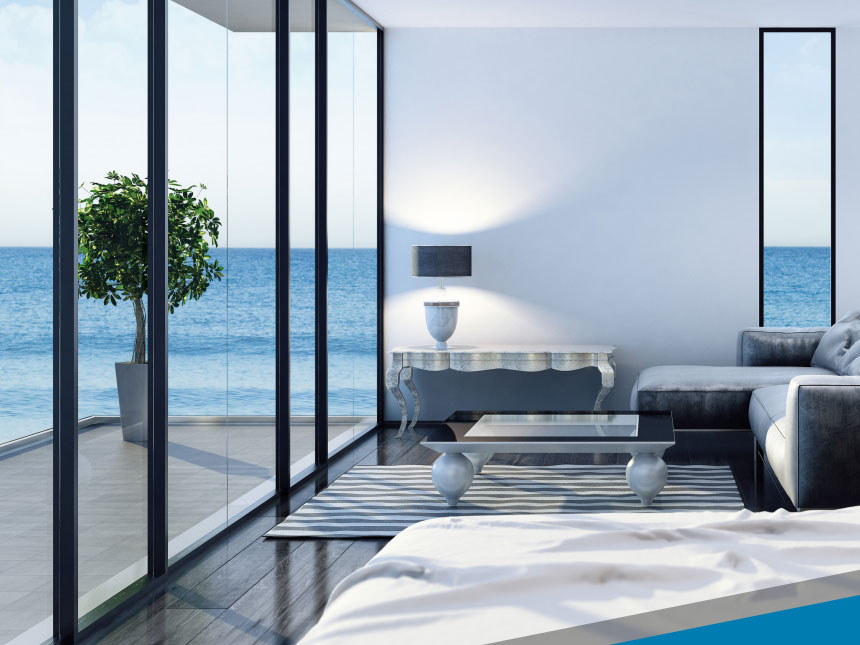

Heat rejection window film can reduce solar heat gain through compatible west-facing glass. The right choice depends on the existing windows, afternoon shade, the brightness you want to keep and the room's cooling needs. There is no single tint or guaranteed temperature reduction for every South Florida home.
Updated September 30, 2026.
Why does this room get hot in the afternoon?
West-facing windows can receive direct sun late in the day, when the house and outdoor air are already warm. A room with exposed sliding doors may behave differently from one shaded by a neighboring building or deep balcony. Direction is a useful starting point, but the actual exposure matters more than a blanket prescription for every west window.
Before requesting a quote, note when discomfort starts, where sunlight falls and whether glare or warm room air is the main problem. If the room stays uncomfortable without direct sun, ask an HVAC professional to check airflow and cooling performance too. Window film does not fix an undersized system or leaking window seals.
How do I compare heat rejection films?
Ask for performance data for the proposed film on comparable glass. Look at these measures together:
- Solar heat gain coefficient (SHGC): lower values mean less solar heat passes through the rated glazing system.
- Visible light transmission (VLT or VT): higher values generally mean more daylight passes through.
- Total solar energy rejection (TSER): compare products using the same test glass and conditions.
- Visible reflectance: consider the appearance outside and reflections inside, especially after dark.
ENERGY STAR's explanation of window-performance ratings is a useful reference for SHGC and visible transmittance. These ratings describe glazing performance; they do not predict a percentage reduction in your household electricity bill.
Ask to see samples on your windows during the hours that bother you. A film that looks light in a showroom can look different on factory-tinted glass. Our heat rejection film service is a starting point for comparing finishes and goals.
Do I need to tint every window?
You can discuss treating the rooms with the clearest heat or glare problem first. Before choosing different films for different elevations, check how they will look together from outside and whether your condo association has appearance requirements.
For the quote, list the living room, bedrooms or office individually. Include window dimensions, nearby shade and the times you use each room. That is more useful than requesting the darkest available film for the entire home.
Can film go on impact, double-pane or low-E glass?
Compatibility needs to be checked for the specific product and window. Identify the glazing manufacturer, coatings and existing warranty. The IWFA's guidance on glass compatibility explains that film can affect thermal stress and that low-E applications depend on the coating and its location.
Request the manufacturer's film-to-glass guidance and written warranty terms before installation. Existing impact windows may already have solar-control features. Our film and impact-window comparison explains how to separate comfort improvements from storm protection.
Will it make the room dark or give nighttime privacy?
Appearance varies by product and existing glass. Compare daylight, glare and exterior appearance together instead of assuming every ceramic film is nearly clear. For nighttime privacy, plan an opaque shade or curtain; transparent tint does not guarantee privacy when the room is lit and it is dark outside.
How much will it save on cooling?
A responsible estimate needs the treated glass area, current window performance, shade, thermostat settings and cooling system. We do not promise a fixed cooling-bill percentage from the direction a room faces. See our South Florida window-film energy savings guide for the inputs to request and how to compare bills after installation.
What should I send for an estimate?
Send photos of the problem windows, approximate dimensions, any glass labels and the hours when the room gets uncomfortable. Include whether the property is a house or condo and whether retaining a clear view is your priority.
Blackridge Film is based in Hollywood and serves South Florida. Request a heat-rejection consultation for your home in Miami-Dade, Broward or Palm Beach County.