Most people ask us about heat or privacy when they call about a Brickell high-rise. The question that actually decides the job is one they rarely think to ask: what is the film made of. On a glass tower packed with people working from home, taking calls, and streaming to three devices at once, the wrong film can cost you signal. Metalized film reflects heat well, but it also behaves like a screen against the radio waves your phone, your Wi-Fi router, and your car's GPS depend on. That is the reason we specify ceramic film almost every time we work above the tenth floor in Brickell. Here is the physics of a glass tower, and why the material matters more here than almost anywhere else in window film in Brickell.
Metalized film and the signal problem at height
Traditional solar films get their performance from a thin metal layer, usually aluminum or a sputtered alloy, that reflects infrared energy. That same conductive layer reflects other parts of the spectrum too, including the frequencies that carry cellular data, GPS, and Wi-Fi. On a single-story house the effect is minor because your phone has a dozen other paths to a tower. Forty floors up in a curtain-wall tower, the walls are glass, and that glass is often the only path a signal has in or out of the unit.
Wrap that glass in a metalized film and you have effectively built a partial Faraday cage around your living room. Residents notice it as calls that drop near the window, a phone that clings to one bar in the exact spot with the best view, and a mesh router that never quite reaches the far bedroom. It is a common and avoidable outcome.
Ceramic film solves this at the material level. It rejects infrared heat through a non-metallic, non-conductive ceramic particle layer, so it does not attenuate RF the way a metalized film does. Cellular, GPS, and 5G pass through largely undisturbed. For a connected household in a glass tower, that difference is the whole reason to choose ceramic, and it is why our heat rejection film specifications for Brickell lead with ceramic construction rather than reflective metal.
How curtain-wall glass behaves differently than a punched window
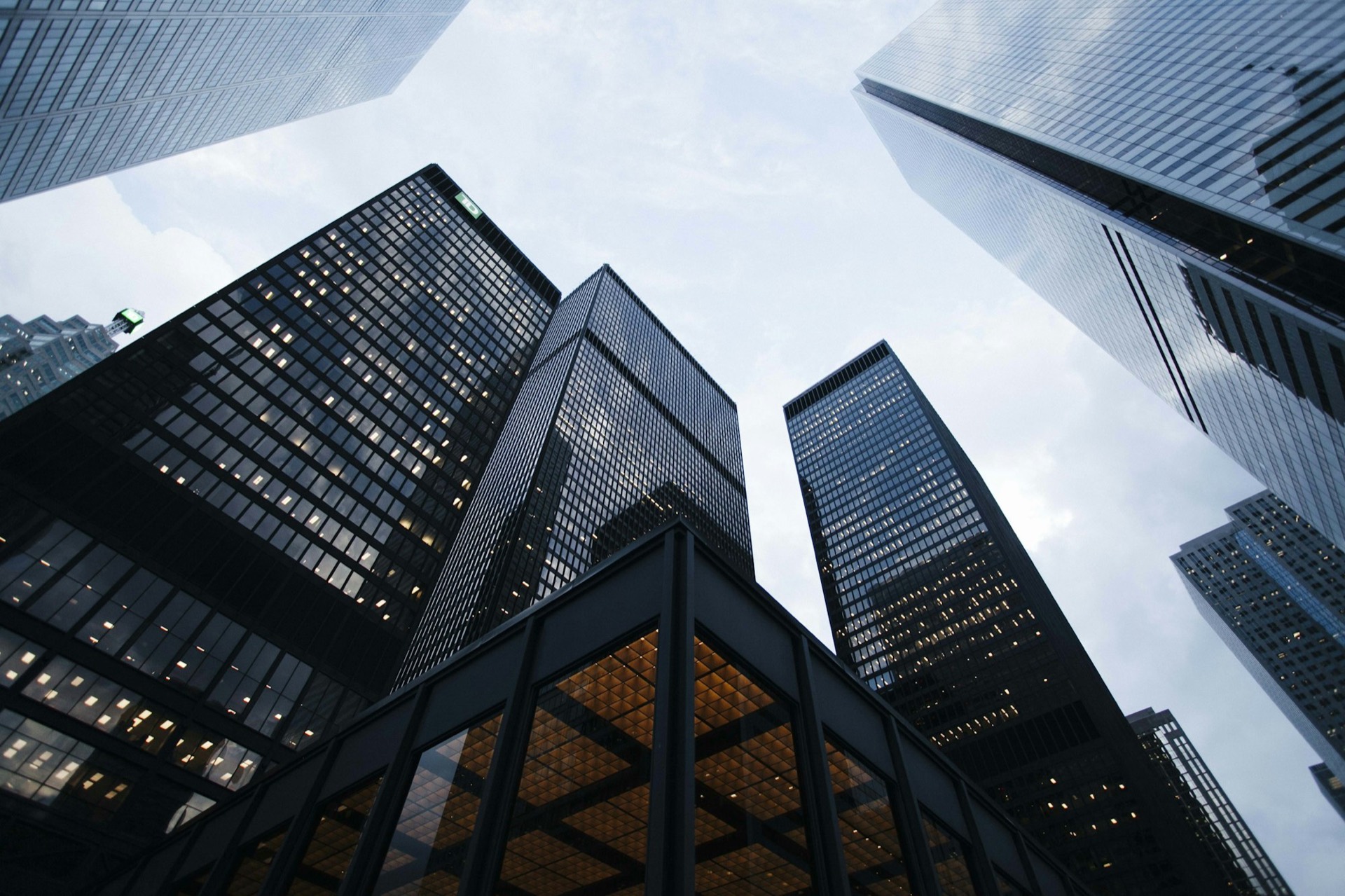
A Brickell tower is not built from windows set into walls. It is built from a curtain wall, a continuous skin of glass panels hung on the structural frame, often floor to ceiling with structural silicone joints and spandrel sections between floors. That construction changes how film has to be specified.
Two things matter here. First, large uninterrupted spans of glass absorb and re-radiate a lot of energy, and the panels sit in metal framing that conducts heat and expands in the sun. Film that runs edge to edge on a big curtain-wall lite has to account for the thermal stress the glass is already under, which is why we match film absorption to the specific glass makeup rather than applying one product to every pane. Second, many curtain walls use coated, tinted, or laminated glass that already carries some solar treatment from the factory. Layering the wrong film over an already-absorptive coated unit raises the risk of thermal stress fracture. We confirm the existing glass construction before we quote, and we choose a ceramic film whose absorption profile is safe for that specific lite.
West-facing heat load, high above the street
Brickell's west and southwest elevations look toward the Everglades and the afternoon sun with nothing in the way. There is no neighboring roofline, no tree canopy, no terrain. Above the tenth floor you also lose the small amount of shading that lower buildings and street-level structures give the base of the tower. The glass takes direct low-angle sun from early afternoon until dusk, and the framing bakes along with it.
On clear glass, roughly three-quarters of that solar energy comes straight through as heat. A quality ceramic film cuts solar heat gain on the treated glass by around 60 to 70 percent while keeping visible light transmission high, so a west unit stays usable in the late afternoon without the room going dark. Residents on treated west elevations typically see cooling costs on those rooms fall by 20 to 40 percent, and the harsh temperature gradient between the glass line and the interior of the unit flattens out. Ceramic does this without the mirror finish of a metalized reflective product, which matters both for the interior feel and for how the tower reads from outside.
Glass-to-glass privacy between neighboring towers
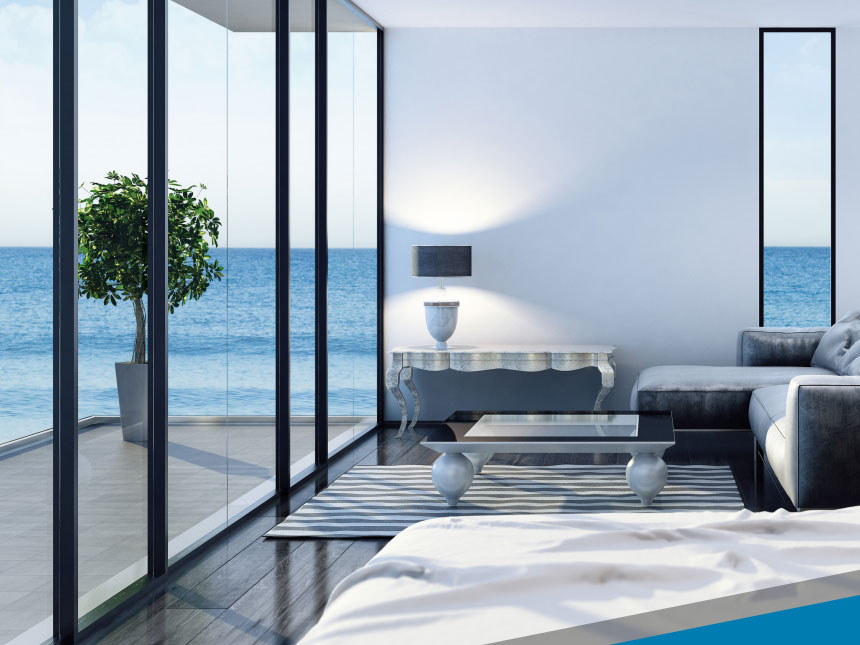
Brickell towers sit close, and they face each other. Your floor-to-ceiling glass frames the skyline, and it frames you for the residents in the tower across the street, often at the same eye level. Curtains erase the view you paid for, so most residents want a film answer instead.
A ceramic tint in a lower visible-light-transmission range gives strong daytime screening from the neighboring tower while holding heat rejection and keeping the view outward. If you want a firmer mirror effect for daytime privacy, reflective film reads as a mirror to the tower opposite during daylight hours while you see out clearly. One honest caveat for tower living: daytime privacy films rely on exterior light being brighter than interior light, so after dark with your lights on, that balance flips and the screening weakens. For evening privacy against a facing tower, we pair a ceramic tint with sheers and walk you through the tradeoff before you decide. If you want to go deeper on the material itself, our post on ceramic window film in Miami covers how the technology performs across the county.
What to confirm before you film a Brickell tower unit
Because a curtain wall is shared building fabric, the sequence matters. We confirm your existing glass construction and any factory coating, match a ceramic film whose absorption is safe for that lite, and document the visible light transmission and exterior reflectance figures your association's architectural review will ask for. Most Brickell boards approve neutral ceramic film readily because it preserves a uniform facade and avoids a heavy mirrored look. The work runs from inside the unit, no exterior access or scaffolding, and a typical unit is a single day on site. The film needs a two to four week moisture cure during which light haze or small water pockets clear as the adhesive sets, and a quality ceramic solar film carries a 15-year manufacturer warranty against bubbling, peeling, and color shift.
Frequently asked questions
Will window film hurt my cell signal or Wi-Fi in a high-rise?
Metalized and reflective films can, because their conductive metal layer attenuates radio frequencies, and in a glass tower the glass is often the main signal path in and out. Ceramic film is non-metallic and non-conductive, so it lets cellular, GPS, and 5G through largely undisturbed. In a connected Brickell unit, that is the main reason we specify ceramic over metalized film.
Can film crack the coated or tinted glass in my curtain wall?
It can if the wrong film is applied to an already-absorptive coated or laminated lite, because the added absorption raises thermal stress. We identify your existing glass construction first and select a ceramic film whose absorption profile is safe for that specific pane, which is how we avoid thermal stress fracture on curtain-wall glass.
Does ceramic film reject as much heat as metalized reflective film?
Yes. A quality ceramic film cuts solar heat gain on the treated glass by roughly 60 to 70 percent, comparable to reflective products, while keeping visible light high and staying non-metallic. You get the heat performance without the signal interference or the mirror finish.
Will a ceramic tint keep the tower across from me from seeing in?
During daylight it gives strong screening from the facing tower while you keep your outward view. After dark, with interior lights on, daytime privacy films weaken because the light balance reverses, so for evening privacy against a neighboring tower we pair the ceramic tint with sheers.
If your Brickell high-rise runs hot in the afternoon, drops calls near the glass, or sits in full view of the tower across the street, contact Blackridge Film for a free consultation. We specify and install ceramic and reflective film for high-rise condos across Miami-Dade, Broward County, and Palm Beach, including Brickell, Downtown Miami, Edgewater, and Coconut Grove.