
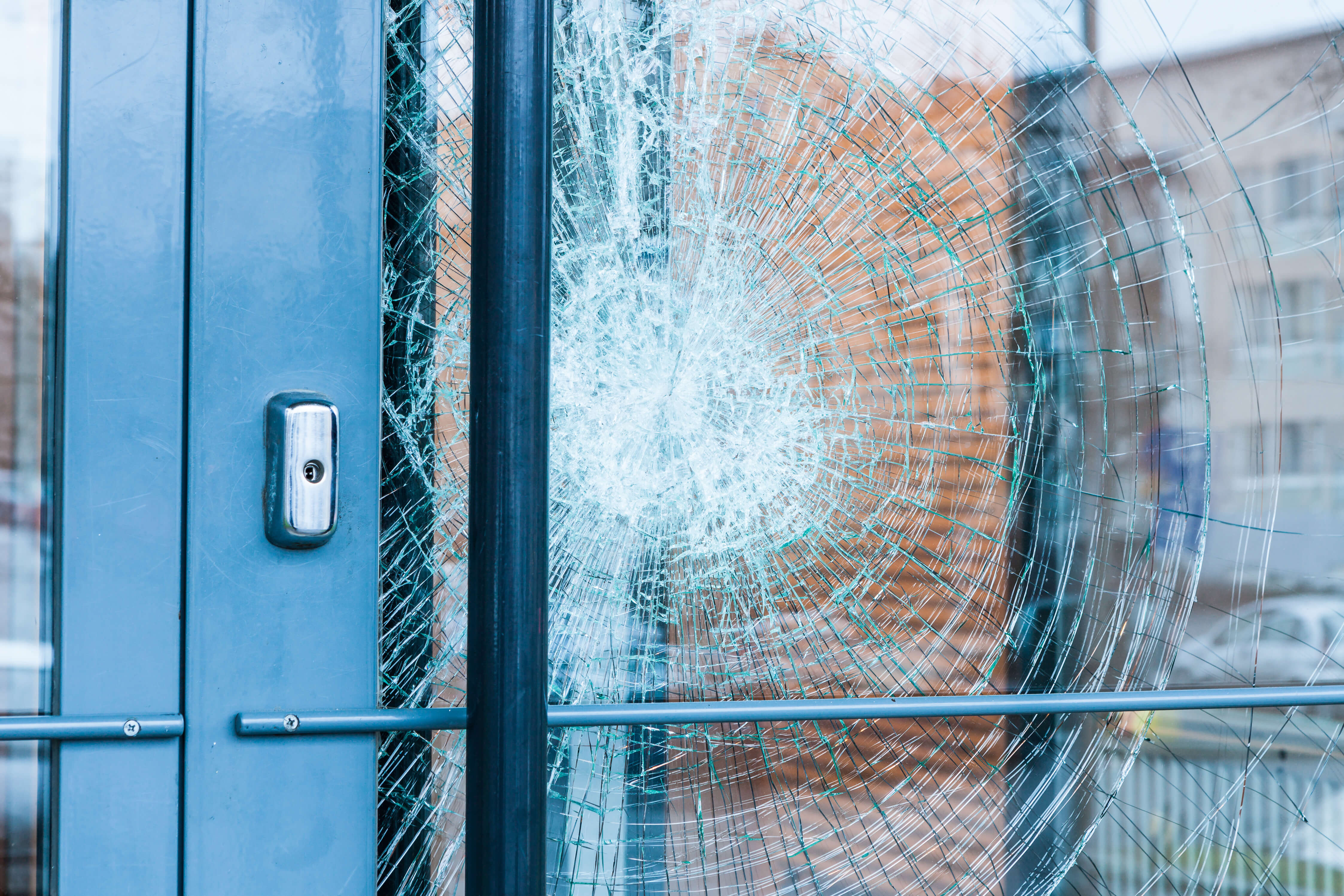
A condo board in Broward County usually thinks about glass twice: once when a unit owner asks about hurricane protection, and again after a break-in or a storm forces an emergency assessment. Security window film gives South Florida HOAs and condo associations a way to get ahead of both. For boards managing multifamily buildings across Miami-Dade, Broward County, and Palm Beach, it is one of the few glass upgrades that protects residents, lowers risk, and preserves a uniform building appearance without a full window replacement or a special assessment that members will fight.
Here is how associations should think about it.
Why glass is the association's shared liability
In a condo or HOA building, the windows and sliding doors are often a shared structural concern even when the glass sits inside a unit. A failure on the twelfth floor of a Brickell tower or a Fort Lauderdale beachfront building does not stay contained. Falling glass is a life-safety hazard for residents below and for the public on the sidewalk. An open envelope during a storm raises interior pressure and threatens the roof and common structure above.
Standard annealed and older single-pane glass offers no meaningful resistance to windborne debris or forced entry. When it shatters, fragments disperse and the opening compromises the whole building. For an association, that is not one owner's problem. It is a board liability, an insurance question, and a reserve-study line item all at once.
How security window film works
Anti-shattering security film is a thick polyester laminate, typically 8 to 14 mil, bonded to the interior face of the glass with a pressure-sensitive adhesive. When a projectile strikes the pane and the glass cracks, the film holds the fragments together as a single sheet. The glass breaks, but it stays in the frame.
The protection runs through three mechanisms. Fragment retention keeps shards bonded across the entire pane rather than scattering them across a unit. Dwell time means a filmed pane takes measurably longer to penetrate, which slows both storm debris and a forced-entry attempt. Envelope integrity keeps the cracked pane in place, so interior pressure builds more slowly and the common structure stays protected longer.
Our 8-mil film carries a break strength of roughly 200 lbs per inch and is tested to ASTM F3561 and EN 356 for forced-entry resistance. The 14-mil runs around 325 lbs per inch for higher threat profiles. On non-impact glass, an engineered film-and-frame-anchor system can carry a Miami-Dade County Notice of Acceptance, which documents the assembly performance for inspectors and insurers.
What Florida law allows associations to claim
Boards should know the rules before any contractor makes promises. No film product can be legally marketed as hurricane-proof or hurricane-resistant in Florida, and film is not a substitute for impact-rated glazing under the Florida Building Code. What film does provide is documented fragment retention and improved glass behavior under impact. For an association, the right framing in owner communications is straightforward: this is a safety and risk-reduction layer on existing glass, not a code-equivalent replacement.
That distinction matters at the annual meeting. It keeps the board honest with members and avoids the overstated marketing claims that create legal exposure later.
Uniform appearance and HOA compliance
The reason many condo associations struggle with window upgrades is appearance control. Governing documents almost always require a consistent exterior look, and individual owners installing mismatched tint creates an enforcement headache. A building-wide security film program solves this. Every pane gets the same specification, the same visible light transmittance, and the same exterior reflectance, so the facade reads as one surface from the street in Coral Gables or the Intracoastal in Hollywood.
Film also installs from the interior without altering the structure, which means it does not trigger the architectural review that a window replacement would. For HOA managers, that is the difference between a board vote and a years-long capital project.
Benefits beyond security for South Florida buildings
Even in seasons without a major storm, a film program earns its place in the budget.
Energy savings on common loads. South Florida cooling cost is driven by solar heat gain through glass. A heat rejection film drops the solar heat gain coefficient on 6mm clear glass from about 0.73 to 0.21, the largest thermal reduction available short of replacing glass. West Palm Beach and Fort Lauderdale buildings commonly see 20 to 40 percent lower cooling cost on treated elevations, which flows straight to the association's shared electric meters and hallways.
UV and interior protection. Every film we install blocks at least 99 percent of UVA and UVB. Our UV protection film protects lobby furnishings, corridor finishes, and owner interiors from the fading that the South Florida sun drives year-round.
Daytime privacy. For ground-floor units and amenity decks facing a street or a neighboring tower, our privacy tints add daylight privacy without curtains and without breaking the uniform exterior look the documents require.
Frequently asked questions
Does a building-wide film install need owner approval?
It depends on your governing documents. Because film installs from the interior and does not alter the structure, many associations can approve it as a maintenance or safety measure by board vote. We provide the spec sheet and documentation your attorney needs to confirm the path for your building.
Can security film help with our insurance?
Sometimes. The standard OIR-B1-1802 wind mitigation form does not credit film alone, but film paired with a frame-anchoring system on non-impact glass can change the picture. We document every install with the Notice of Acceptance number, pane dimensions, and attachment spec. The final premium decision belongs to your insurer.
How long does the film last on a high-rise?
Properly installed interior security and solar film on residential glass typically lasts 12 to 20 years, and most of our security and solar products carry a 15-year manufacturer warranty. We document the spec for each glazing type so future boards have a clear record.
Can we phase the project across multiple buildings?
Yes. Most associations in Miami-Dade and Broward County phase by elevation or by building to spread cost across budget years while keeping the specification identical, so the finished facade still matches.
Will film work on our existing impact windows?
Yes. Impact glass is built for integrity, not UV blocking, heat rejection, or glare control. Solar and UV film over existing impact glazing addresses all three. We confirm compatibility with the glazing manufacturer in writing first.
If you manage or sit on the board of a condo association or HOA and want a clear recommendation for your building's glass, contact Blackridge Film for a free consultation. We serve multifamily properties across Miami-Dade, Broward County, and Palm Beach, from Brickell and Coral Gables to Fort Lauderdale, Hollywood, and West Palm Beach.