
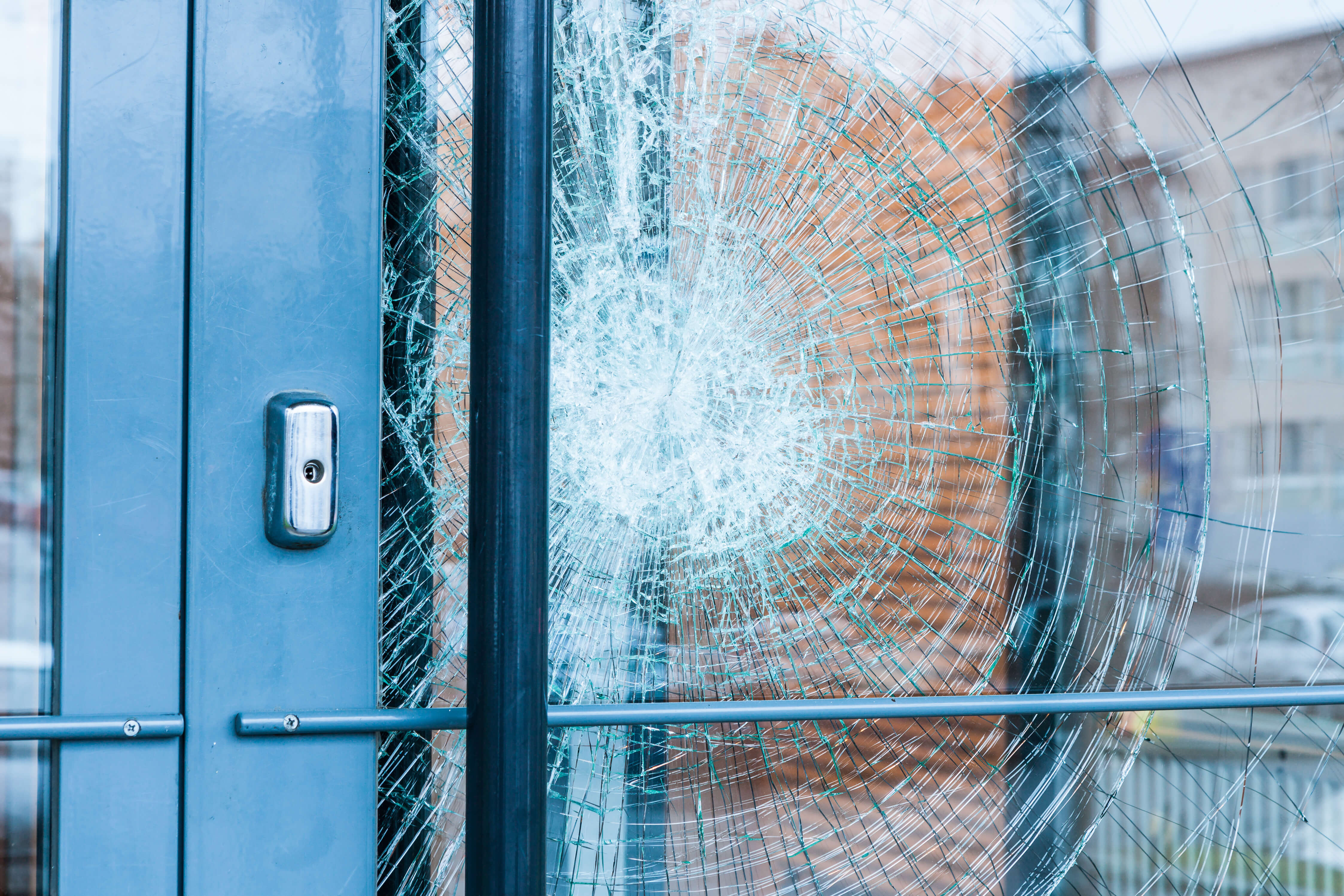
Most break-ins along the New River and the canal streets east of Federal Highway do not start with a kicked-in door. They start at the glass. A back slider, a ground-floor window screened by hedges, a patio pane that sits out of view from the street. Security window film for Fort Lauderdale homes hardens that glass so it holds together under impact instead of falling away in shards. It will not turn annealed glass into an impact window. What it does is buy time, and time is what stops most forced entries. For Broward County homeowners working with existing glass, it is the most practical retrofit available.
Here is how it works and how to specify it correctly.
Why the window is the weakest point in your home
Glass is the softest part of any building envelope. A locked door or a deadbolt resists a shoulder. A standard window pane does not resist anything. An intruder taps a corner, the annealed glass shatters, and the opening is clear in seconds. The same physics applies during a storm, when a roof tile or a piece of a neighbor's fence becomes a projectile.
Fort Lauderdale homes are especially exposed. Many are single-story with wide sliders facing a pool, a canal, or a fenced yard that hides the rear of the house. Ground-floor glass in neighborhoods from Victoria Park to Coral Ridge gives an intruder a quiet, unseen entry point. The glass is the problem, and the glass is exactly what film addresses.
How security window film holds glass together
Anti-shattering security film is a thick polyester laminate, typically 4 to 12 mil, bonded to the interior face of your glass with a pressure-sensitive adhesive. When something strikes the pane and the glass cracks, the film holds the fragments together as one sheet. The glass breaks, but it stays in the frame.
The protection works through three mechanisms. Fragment retention keeps shards from spraying into the room, because the adhesive bonds across the entire glass surface. Dwell time is the delay a filmed pane adds before full penetration, often measured in additional minutes against a forced-entry attempt. Envelope integrity means the filmed pane stays largely in the frame after cracking, so the interior stays sealed longer during a storm and interior pressure builds more slowly.
Our 8-mil security film is tested to ASTM F3561 and EN 356 for forced-entry resistance, with a break strength near 200 pounds per inch. The 14-mil carries roughly 325 pounds per inch and is specified for higher threat profiles.
Storm debris and Broward County hurricane exposure
Security and storm protection overlap on the same pane. Broward County sits in one of the most storm-exposed corridors in the country, and windborne debris is the leading cause of glass failure during a hurricane. When a window fails mid-storm, shards fly inward and the building envelope opens, which lets interior pressure rise and puts the roof structure at risk.
Security film does not stop a window from cracking under a direct impact. It keeps the cracked glass in place, which slows that chain of failures. For Fort Lauderdale homeowners who already have impact windows on some elevations and older annealed glass on others, film is a sensible way to harden the panes that were never upgraded.
What Florida law says about film and storms
Florida regulates how window film can be marketed, and you should know the rules before any contractor makes a promise. No film product can be legally marketed as hurricane-proof or hurricane-resistant in this state. Film is not a substitute for impact-rated glazing under the Florida Building Code.
What film can do, when properly installed, is provide real fragment retention and improve how your glass behaves under impact. On non-impact single-pane glass, an 8 or 14 mil security film paired with an engineered frame-anchoring system can carry a Miami-Dade County Notice of Acceptance (NOA), which documents the performance of the film and attachment as an integrated assembly. That documentation is what inspectors and insurers look for, and it is the right way to evaluate any storm-preparedness claim.
Benefits beyond security
A thicker security film does incidental thermal work, but each upgrade has a purpose. Every film we install blocks at least 99 percent of UVA and UVB, which protects hardwood floors, leather, and artwork from the fading that destroys interiors in the Fort Lauderdale sun. If heat and cooling cost are the priority, a heat rejection film on sun-exposed glass makes a larger difference, dropping solar heat gain coefficient from roughly 0.73 on clear glass to 0.21, which is the single biggest thermal reduction available without replacing the glass.
For street-facing and canal-facing rooms, our privacy tint and reflective film lines block the daytime sightline in while you keep your view out. Many Fort Lauderdale homeowners combine a security film on ground-floor and rear glass with a heat or privacy film on the elevations that take the most sun and the most attention.
Frequently asked questions
Does security window film actually stop a break-in?
It does not make glass unbreakable, but it removes the quick, quiet entry most intruders rely on. A filmed pane cracks and stays in the frame, forcing repeated, loud, time-consuming hits. That delay is often enough to trigger an alarm or send an intruder looking for an easier target.
Can I put security film on my existing impact windows?
Yes, and it often makes sense. Impact windows are built for glass integrity, not for UV blocking, heat rejection, or glare control. A solar or UV film over impact glass adds those benefits without affecting the impact rating. We confirm compatibility with the glazing manufacturer in writing before we start.
How long does security film last in South Florida?
Properly installed interior security and solar film on residential glass typically lasts 12 to 20 years. Most of our security and solar products carry a 15-year manufacturer warranty for residential installs.
Will film qualify me for an insurance credit?
On its own, film usually does not earn a wind mitigation credit. When it is paired with a frame-anchoring system on non-impact glass, the picture can change. We document every install with the NOA number, pane dimensions, and attachment spec, but the final premium decision belongs to your insurer.
How long does installation take?
A typical eight-to-twenty pane residential install runs one to two days on site. Film then needs a 30 to 90 day cure period, during which light haze or small optical pockets are normal and resolve on their own.
If you want to harden the glass on your Fort Lauderdale home before the next storm or break-in attempt, contact Blackridge Film for a free consultation. You can also see the full range of our window film in Fort Lauderdale and the elevations it suits best. We serve Fort Lauderdale, Hollywood, and homeowners across Broward County, Miami-Dade, and Palm Beach.