
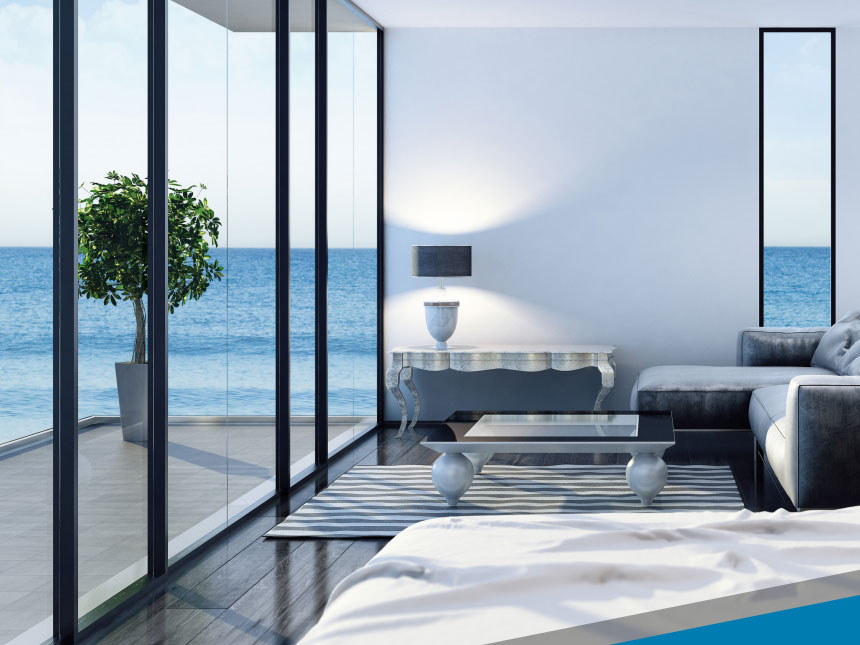
South Florida is one of the highest UV-load environments in the United States. Year-round sun, low latitude, and the reflective amplification from water and white sand create cumulative UV exposure that accelerates interior degradation faster than homeowners typically expect. High-quality UV rejection window film addresses this systematically. But understanding what it does, and what it doesn't do, requires a clear look at the science.
What UV Actually Does to Interiors
Ultraviolet radiation. Specifically UV-A (315–400 nm) and UV-B (280–315 nm). Initiates photo-oxidation reactions in organic materials. Dyes fade. Polymers degrade. Natural fibers weaken. The progression is slow enough that most homeowners don't notice until they move a piece of furniture and see the color difference between the sun-exposed surface and the protected underside.
The Skin Cancer Foundation and Lawrence Berkeley National Laboratory both estimate that UV radiation accounts for approximately 40–60% of total interior fading. (Visible light contributes another 25–30%; heat accounts for most of the remainder.) The important implication: eliminating UV doesn't stop all fading, but it eliminates nearly half of it immediately and permanently.
The damage is not uniform across materials. High-risk interior elements in South Florida homes:
- Natural hardwood flooring. UV causes oxidation and graying of unfinished wood; bleaching and color shift in finished floors
- Textile furnishings. Wool, silk, and natural-dye fabrics fade faster than synthetics; red and blue dyes are particularly susceptible
- Leather. UV exposure dries out the surface layer and initiates cracking independent of mechanical wear
- Artwork. Oil paintings are relatively stable; watercolors, gouache, and works on paper are highly UV-sensitive; even limited UV exposure causes irreversible damage to sensitive pigments
- Photography and printed media. Framed photographs and fine art prints fade rapidly with UV exposure; this is well-documented in museum conservation literature
How Window Film Rejects UV
UV protection and visible tint are different performance measures. Our listed Solar Gard PureVue Ceramic films block more than 99% of UV light in the manufacturer’s stated 300–380 nm range, while offering several levels of visible light transmission.
Compare UV data using the same wavelength range and test conditions. Solar Gard publishes its PureVue figures for 6 mm clear glass; the installed result and appearance depend on the selected film and glazing. See the manufacturer’s PureVue data and our current UV protection range.
Film UV rejection is durable. The metallic and ceramic UV-blocking layers are stable over the film's rated life; they don't degrade the way surface coatings on window treatments (blinds, shades) do. A quality UV film installed on clean glass with a proper adhesive bond maintains its UV rejection profile for the full warranty period.
Clear vs. Solar Film for UV Protection
This is where many customers are surprised: clear UV-rejection film provides the same UV blocking as tinted or reflective solar film. The UV spectrum is outside the visible spectrum; blocking UV does not require reducing visible light transmission.
If UV protection is your main goal, compare the lighter PureVue Ceramic options on your glass. Higher visible light transmission preserves more daylight; low reflectance helps maintain a natural appearance.
If UV protection and solar heat rejection are both goals. Common on south- and west-facing glass in South Florida. A dual-function heat rejection film addresses both. These films combine UV blocking with reflective or absorptive coatings that reduce total solar energy transmission, lowering both UV load and cooling costs.
The South Florida Solar Angle Problem
South Florida's latitude (25–26°N for Miami-Dade and Broward) means the sun is higher in the sky year-round than in most of the continental US. This matters for window film because the angle of incidence affects how much solar energy enters through the glass. Low-angle morning and afternoon sun penetrates deeper into the room than high-angle midday sun. It reaches further back and hits more surface area.
East-facing glass in South Florida takes direct low-angle morning sun for several hours daily during summer, and year-round in winter when the sun's declination shifts south. West-facing glass takes the same exposure in the afternoon. Both orientations need UV management; south-facing glass is typically less problematic because the higher sun angle means more reflection off the exterior glass surface.
We assess each glazing orientation during the walk-through and can give you a solar exposure model for your specific property based on glass area, orientation, and any existing shade structures.
Protecting Specific Assets
Art collections. If you have works on paper, photography, or sensitive pigments anywhere near glass, UV film is essential and urgent. We've worked with several South Florida collectors who had significant pieces in rooms with unfilmed windows. And in every case, the damage had already begun. Once fading starts, it cannot be reversed. Film protects what remains.
For collector-grade protection, we recommend clear UV film on all glass in the collection space, including skylights, and a measured VLT that limits visible-spectrum exposure in addition to UV. This is consistent with museum conservation practice for galleries that allow natural light.
Hardwood and stone flooring. Dark-stained hardwoods are particularly susceptible to UV bleaching along the lines where sunlight patterns fall. We've seen dramatic light/dark contrast develop within two to three years on unprotected floors in oceanfront properties. UV film can reduce further exposure; it cannot reverse existing damage.
Luxury furnishings. Silk, mohair, and natural-dye upholstery fabrics used in high-end residential work are often specified without awareness of UV vulnerability. Interior designers who specify UV film during the design phase. Before furniture is installed. Get ahead of the problem entirely.
Installation and Expectations
Before installation, compare a sample of the selected film. Even a low-reflectance product changes light transmission, and its appearance depends on the glass and lighting. Your quote identifies the product and its applicable warranty.
Cure time is the same as for other film types: thirty to ninety days for full adhesive cure. During this period you may notice minor optical variations that resolve completely. After cure, the film is maintenance-free with normal glass cleaning (no ammonia-based products).
The Return on Investment
The math is straightforward. Quality UV film installed on the glass in a well-furnished South Florida home costs a fraction of what it costs to restore or replace sun-damaged flooring, furnishings, or art. A single fine art print or piece of fine furniture can cost more than a full-house UV film install. And unlike window treatments, film is always in effect. No forgetting to lower the shades, no gaps at the edges where light enters, no variation in protection based on whether someone adjusted the blind.
For South Florida properties with serious interior investment, UV film is not optional. It's the baseline level of care. We recommend starting with a walk-through to assess which glass surfaces pose the highest risk and prioritize accordingly.
Frequently Asked Questions
Does clear UV film block UV without changing the glass appearance?
UV protection does not require a dark tint, but the selected film still affects visible light transmission. The listed PureVue Ceramic products range from 37% to 72% visible light transmission on Solar Gard’s reference glass. Compare samples to choose the right daylight and appearance for your room.
How much of interior fading does UV film actually prevent?
Film reduces UV exposure, one contributor to fading. It does not stop all fading: visible light, heat, exposure time and the sensitivity of the material also matter.
Is UV film worth it specifically for Miami-Dade and Broward properties?
South Florida's latitude means UV load here is among the highest in the continental US year-round. Unlike northern markets where UV intensity drops in winter, Miami-Dade and Broward properties face high UV exposure every month. For any home with hardwood floors, upholstered furniture, artwork, or photography near glass, the cost of film is a fraction of what it costs to restore or replace sun-damaged finishes.
Can UV film be installed on impact windows?
Yes. Impact windows are designed for structural protection, not UV management. Clear UV film applied over existing impact glazing adds UV protection without affecting the impact rating. We confirm compatibility with the glazing manufacturer in writing before any install on warranted impact glass.
How long does UV window film last in South Florida?
Interior UV film on residential glass in air-conditioned spaces typically lasts 12 to 20 years. The UV-blocking layers in quality films are stable over the rated life and don't degrade the way surface coatings on blinds or shades do. Every Blackridge Film install comes with manufacturer warranty documentation.
If your South Florida home has art, flooring, or furnishings you want to protect, contact Blackridge Film for a free consultation. We serve properties across Miami-Dade, Broward County, and Palm Beach. We'll assess your glass orientations, identify the highest-risk exposures, and give you a specific recommendation with no obligation.