Both solar film and security film sit under the broad "architectural window film" umbrella, and both can reduce heat and glare. But in South Florida — where summer heat load is relentless and hurricane exposure is real — the manufacturing profiles and design objectives matter enormously. Mixing them up leads to wrong specifications, disappointed clients, and film that fails prematurely. Here's a clear comparison.
What Each Film Is Engineered to Do
Solar film is engineered to manage the solar spectrum. Its primary job is to reject solar heat (total solar energy rejected, or TSER) and control visible light transmission (VLT). High-performance solar films achieve 60–80% total solar energy rejection while maintaining useful daylight. Some are near-clear; others are reflective or tinted. The laminate construction is typically thinner. 1.5 to 4 mil. Because structural strength is not the design goal.
Security film is engineered to manage impact and forced entry. Its primary job is fragment retention and breach delay. The laminate is significantly thicker. 4 to 12 mil for standard security grades, and heavier for blast-rated or ballistic-adjacent applications. Some security films have tint or reflective coatings layered in, but the core is a thick, high-tensile polyester that holds glass together under mechanical stress.
Where They Overlap. And Why That Matters
The overlap creates confusion: thicker security films do provide some incidental solar control, and some dual-purpose films exist that are marketed for both roles. But incidental solar performance from a security film is not the same as an engineered solar film. The reflective or tinted coatings on a security film are not calibrated the same way, and the spectral rejection profiles are different.
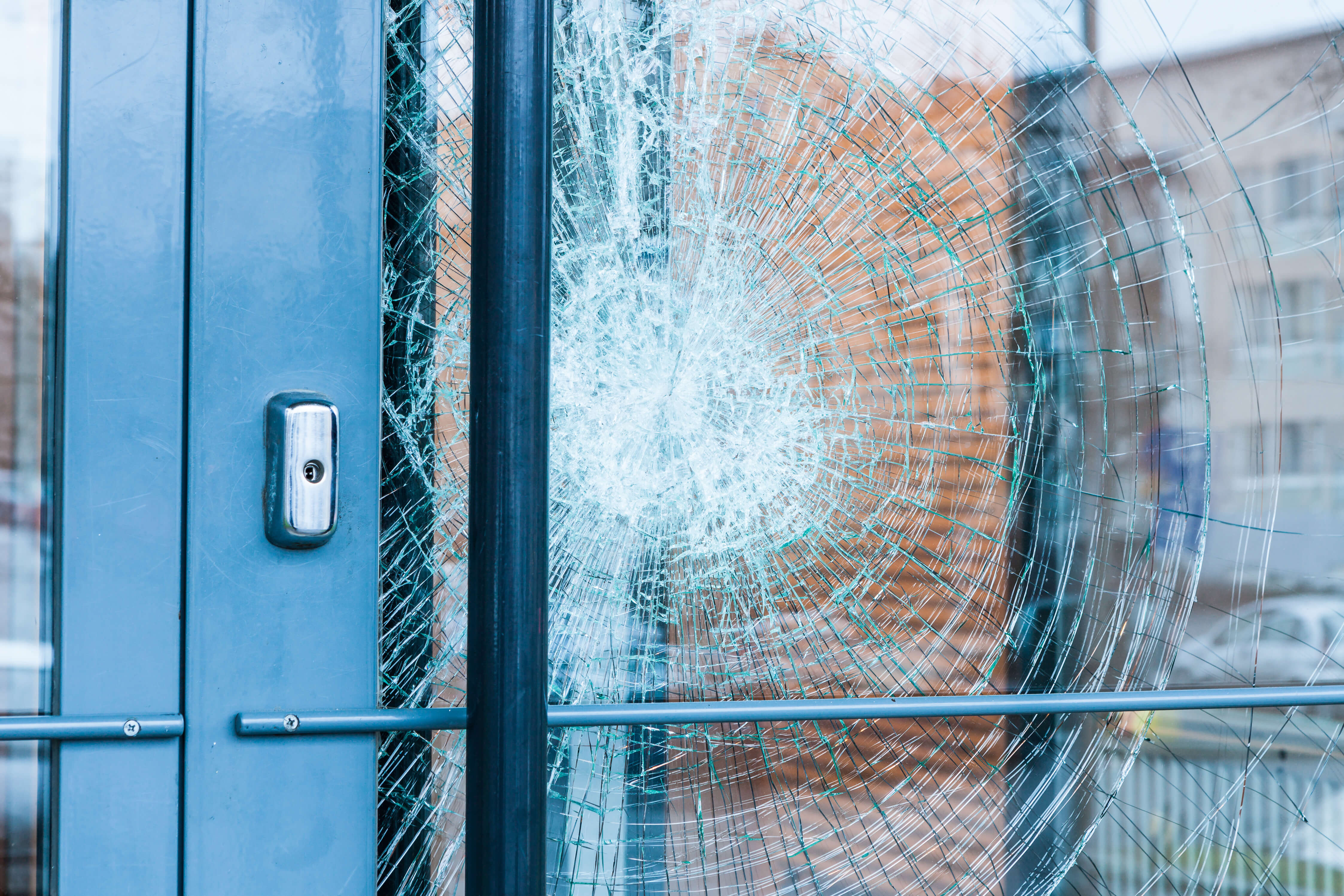
Similarly, a thin solar film provides some fragment retention. If you film a window and then break it, the glass doesn't scatter as freely as unfilmed glass. But thin solar film is not an anti-shattering system. It won't hold under sustained load or repeated impact the way an engineered security film will.
If your priority is thermal comfort and glare reduction, specify solar film. If your priority is impact protection, forced-entry delay, or blast mitigation, specify security film. If you need both, you need to decide which is primary and spec accordingly. Or use a hybrid product that's been tested and rated for the specific combined application.
Appearance and Aesthetics
Solar films offer a much wider aesthetic range because appearance is part of the spec. You can get near-clear films that are virtually invisible, lightly tinted films that darken the glass subtly, and dual-reflective films that give the exterior a mirror-like appearance while maintaining good interior visibility. The South Florida heat rejection films we most commonly install fall in the dual-reflective category for maximum TSER.
Security films are primarily functional. They tend to be clear or lightly tinted. Visibility into and out of the protected space is usually a priority for security applications. Frosted or decorative patterns can be laminated into or applied over security film, but the base film itself is engineered for strength, not aesthetics.
Performance Metrics That Matter
When comparing films for specification, look at the right numbers:
For solar film:
- Total solar energy rejected (TSER): higher is better for heat management
- Visible light transmission (VLT): match to daylight needs and glare preferences
- UV rejection: almost all modern films exceed 99%; check the certificate
- Solar heat gain coefficient (SHGC): lower means less heat admitted; compare to ENERGY STAR benchmarks
For security film:
- Film thickness (mil): 4 mil is entry-level; 8–12 mil is more meaningful for forced-entry
- Tensile strength and elongation: from manufacturer data sheets; relevant for blast applications
- Attachment system: film alone is not a complete system; the frame attachment matters for NOA compliance
- Certification: ANSI/DASMA 115 or ASTM F1233 for impact and forced-entry ratings; Miami-Dade NOA for South Florida permit compliance
The Florida Sun Problem
South Florida is one of the most demanding solar environments in the country: intense UV load, high ambient temperatures, and east-west glass orientations that take direct sun throughout the day. In this climate, the solar performance of a security film matters more than it would in Seattle. We routinely install dual-purpose films. Thick enough for meaningful fragment retention, with engineered solar coatings. For clients whose properties need both. But we specify them as hybrid products with explicit ratings for both functions, not as "solar film that's also thick" or "security film that also rejects heat."
What We Recommend
For most South Florida residential projects, the answer depends on the glass and the threat profile:
- Standard single-pane glass on older properties: anti-shattering film with an engineered attachment system. Solar coatings can be included in the spec.
- Impact windows or laminated glass: heat rejection film or UV film. The impact protection is in the glass; add film for heat rejection and UV blocking.
- Commercial storefront or high-traffic retail: security film for fragment retention and forced-entry delay; solar coatings as a secondary spec if the glass faces direct sun.
- Yachts: marine-rated film that handles salt air, UV exposure, and the specific glazing types found on motor yachts and sailboats.
The honest answer is that most clients don't come to us knowing which category they need. That's what the walk-through is for. We look at the glass, the orientation, the existing glazing, and the protection goals. And then we recommend the specific film that's right, with the data to back it up.
Frequently Asked Questions
Can one film handle both solar rejection and security protection?
Yes, hybrid products exist and are tested for both functions. But incidental solar performance from a security film is not the same as an engineered solar film, and thin solar film is not an anti-shattering system. When both matter — common on South Florida commercial storefronts and residential ground-floor glass — we specify a hybrid product with explicit ratings for both functions, not a single-function film stretched into the other role.
Which film is better for South Florida hurricane prep?
Security film is the relevant specification for storm and forced-entry protection. Solar film provides incidental fragment retention but is not engineered or rated for that function. If you have non-impact glass in Miami-Dade, Broward, or Palm Beach and need hurricane prep, the correct spec is anti-shattering film with an engineered frame-anchoring system carrying a Miami-Dade NOA.
Does solar film meaningfully reduce Florida energy bills?
Yes. SHGC on unfilmed 6mm clear glass runs around 0.73. A high-performance heat rejection film drops that to 0.21 to 0.35 — the largest thermal improvement available without replacing the glass. Most South Florida homes see 20 to 40% off cooling costs on treated elevations, with payback typically under five years.
What is the difference between tinted film and reflective film?
Tinted film absorbs solar energy within the film itself. Reflective film bounces it back off the exterior surface before it can enter the glass. In South Florida's direct sun, reflective films typically outperform absorptive tints for heat rejection. Dual-reflective films also provide daytime privacy from the exterior without the mirror appearance inside at night.
How long does solar or security film last in South Florida?
Interior solar and security film on residential glass typically lasts 12 to 20 years. South Florida's UV intensity is among the highest in the continental US, so UV-stable adhesives and quality film matter more here than in northern markets.
If you are working through the right film specification for your South Florida property — heat rejection, storm prep, privacy, or a combination — contact Blackridge Film for a free walk-through. We serve Miami-Dade, Broward County, Palm Beach, and the full coastal corridor from Boca Raton to Hollywood. We'll assess your glass, review your threat profile, and give you a specific written recommendation with no obligation.