
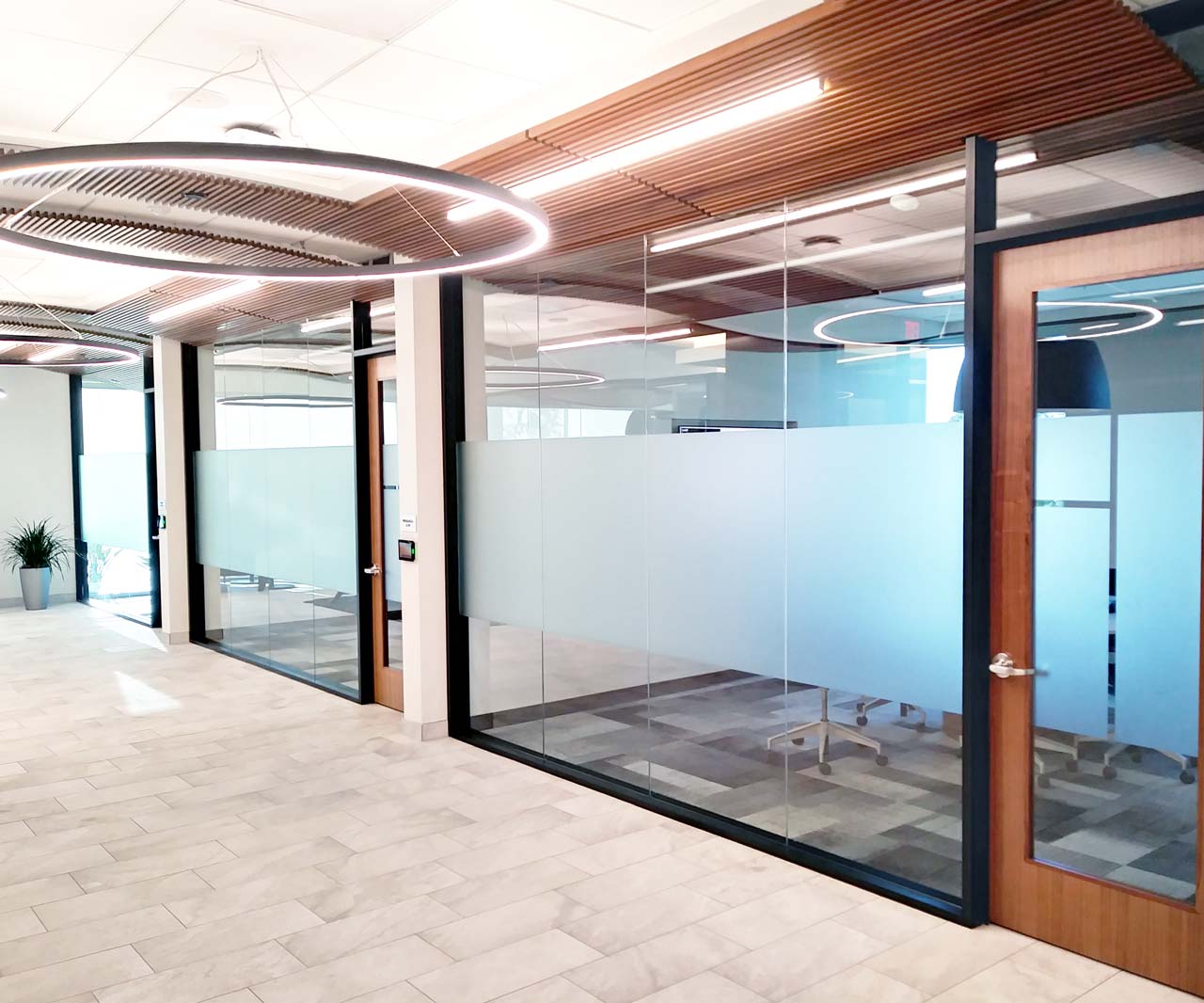
In South Florida homes, offices, and commercial spaces, frosted window film occupies an interesting position in the film catalog: often treated as a purely decorative or privacy product, but when specified and installed well, it does several things simultaneously. And when specified poorly, it creates problems that are expensive to reverse. Here's an honest look at what frosted film is, what it does, and when it's the right choice for Miami-Dade, Broward County, and Palm Beach properties.
What Frosted Film Actually Is
Standard frosted film is a polyester or polyethylene laminate with a milky, translucent surface that diffuses light rather than transmitting it directly. The degree of obscurity is measured as opacity or "frost level". Manufacturers typically offer a range from lightly frosted (you can see silhouettes and shapes through it) to fully opaque (complete visual privacy at any distance).
The light transmission profile of frosted film is fundamentally different from tinted or reflective solar films. Rather than reducing total light transmission uniformly, frosted film scatters and diffuses light. A frosted glass partition transmits 60–70% of visible light while providing complete visual privacy. The space behind it stays well-lit without being visible.
This is the key design insight: frosted film provides privacy without darkness.
Privacy Zoning Without Construction
The most common application we see in South Florida residential and commercial work is interior glass partitions. Open-plan offices that want acoustic transparency but visual privacy. Hotel lobbies with glass-walled executive suites. Residential homes with glass-walled primary bathrooms or dressing rooms. Guest quarters where a glass wall or door needs to feel more private without blocking natural light.
In every case, frosted film provides the privacy at a fraction of the cost and lead time of replacing the glass with genuine sandblasted or etched glass. And with the flexibility to change the specification later if the design intent evolves.
For commercial renovations especially, this is meaningful. Because it's a film rather than etched glass, a future re-spec. Different opacity, a new pattern, a different frost zone. Is a professional strip-and-reinstall rather than replacing the glazing. The film itself is a permanent application: once installed it stays on the glass until a professional removes it, not something that peels off and goes back on.
Pattern Film and Custom Work
Beyond standard full-frost, pattern films add a design dimension that makes them a legitimate architectural material. Common approaches:
Gradient patterns. The glass transitions from clear at the top to frosted at the bottom, or vice versa. Common on exterior-facing glass where you want privacy at eye level but clear sky views above.
Cut patterns and logos. Film can be precision-cut with digital cutting systems into essentially any pattern: geometric forms, company logos, text, decorative motifs. The cut pattern leaves some glass clear and some frosted, creating a graphic that reads clearly from both sides.
Bandwidth privacy. Horizontal or vertical bands of frost interspersed with clear bands. Common in conference room glass where you want some visual privacy but not complete occlusion. Occupants inside can see that someone is approaching; people outside can't read documents on the conference table.
For residential applications, custom frosted patterns on shower enclosures, stair railings, and interior doors are increasingly common in South Florida design. The material cost and install time are substantially lower than bespoke sandblasted glass, and the quality of good pattern film is visually comparable to etch when installed on clean, level glass.
Exterior Applications
Frosted film can be installed on exterior glass, but the specification changes significantly. Exterior film must be weather-resistant, UV-stabilized, and engineered for the moisture, temperature cycling, and cleaning exposure that exterior glass faces. Most interior frosted films are not rated for exterior use.
For South Florida exterior applications. Ground-floor bathroom windows, exterior office glass where privacy is needed. We use films with exterior-grade construction: UV-resistant coatings, moisture-stable adhesives, and warranties that cover outdoor exposure.
The solar performance profile of exterior frosted film is also worth understanding: frosted film doesn't have the reflective or absorptive properties of a dedicated reflective film, so if heat rejection is also a goal, you need to layer the specification. A solar film with a frosted overlay, or a combination product that engineers both functions into a single laminate.
Common Specification Errors
Choosing the wrong opacity level. The most common mistake is going too opaque. A heavy frost on an interior glass door or partition makes the space feel closed-off rather than open. Start with a lighter frost level (30–50% opacity) and move up only if the privacy requirement demands it.
Installing interior film in an exterior exposure. Interior frosted film on an exterior-facing window without shelter degrades faster and may void the warranty. The application environment must be specified correctly.
Ignoring the glass condition. Frosted film reads every imperfection in the glass surface. Chips, scratches, edge damage, and mineral deposits from hard water all show through. On glass that has significant surface damage, the film may look worse, not better. We always clean and assess the glass carefully before we spec or install a decorative film.
Not thinking about cleaning access. Pattern-cut films have edges and transitions that accumulate dust and are harder to clean than smooth film or bare glass. In commercial environments with high cleaning frequency, the pattern spec needs to account for maintenance.
Longevity and End-of-Life Replacement
Interior frosted film in a controlled environment. Air-conditioned space, no direct exterior exposure. Lasts eight to twelve years with normal cleaning. The film ages uniformly, so there's no visible degradation until the end of its life. When it's time to replace, the old film is professionally removed (typically with a steamer and careful scraping) and new film is installed on the clean glass.
Over that timeframe, the design can evolve without replacing the glass itself. Offices get re-leased, homes get sold, privacy needs change. And when they do, a re-spec is a strip-and-reinstall on existing glazing rather than new glass. But the film itself isn't daily-reversible: it's a permanent application that stays on the glass until a professional removes it.
The Design Case
The best frosted film installs we do are the ones where the designer and the client have thought about what they actually want: a specific level of translucency, a precise frost height or width, a pattern that reads cleanly at a specific viewing distance. When frosted film is treated as a design material rather than a privacy patch, the results are compelling. Glass that does something thoughtful with light and privacy rather than just blocking or transmitting.
If you're working on a project where glass is a significant design element and you're considering frosted or patterned film, bring us into the conversation early. The specification options are broader than most designers expect.
Frequently Asked Questions
Does frosted film provide complete privacy?
At full opacity levels, yes. At lighter frost levels (30 to 50% opacity), shapes and silhouettes are visible but detail is obscured. The right level depends on the application — interior office glass typically needs less opacity than a bathroom or bedroom. Going too opaque is the most common mistake; we always discuss frost level with clients before specifying.
How does frosted film compare to sandblasted or etched glass in South Florida?
Visually, quality frosted film is difficult to distinguish from genuine etched or sandblasted glass when installed on clean, level glass. The practical differences are cost and reversibility. Film costs significantly less than refinishing glass, installs in hours, and can be removed and replaced if the design evolves. For South Florida commercial renovations and residential remodels, this makes film the right choice for most applications.
Can frosted film be installed on exterior glass in Florida's climate?
Yes, but the specification changes. Interior frosted films are not engineered for outdoor exposure. For exterior applications in Miami-Dade, Broward, or Palm Beach — ground-floor bathroom windows, exterior office glass — we specify films with exterior-grade construction: UV-resistant coatings, moisture-stable adhesives, and warranties covering outdoor exposure.
Does frosted window film help with heat in South Florida?
Standard frosted film diffuses light but doesn't have the reflective or absorptive properties of a dedicated solar film. For glass where heat rejection is also a goal — common on south- and west-facing surfaces in Fort Lauderdale and Miami — we can layer a solar film beneath a frosted overlay, or specify a combination product that engineers both functions into a single laminate.
How long does frosted film last in South Florida?
Interior frosted film in an air-conditioned space typically lasts eight to twelve years with normal cleaning. The film ages uniformly, with no visible degradation until end of life. At that point, the old film is professionally removed and new film is installed on the clean glass.
If you're considering frosted film for a South Florida home, office, or commercial space, contact Blackridge Film for a free consultation. We serve Miami-Dade, Broward County, and Palm Beach. We'll look at the glass, discuss the design intent, and give you a specific recommendation with no obligation.